123 W. Willow Street Chippewa Falls, WI 54729


A knocked-out tooth can happen in seconds—during a weekend hockey game at the rink, a bike ride along the Old Abe State Trail, or even a simple slip at home. It’s a frightening moment, especially when there’s blood, pain, and panic involved. Knowing what to do immediately can make a critical difference in saving the tooth.
The actions you take in the first few minutes matter more than most people realize. Staying calm and following the right steps can help protect your smile until professional care is available.
Why Immediate Action Is So Important
When a tooth is completely knocked out, the supporting tissues begin to dry out quickly. The sooner the tooth is protected and properly handled, the higher the chance it can be successfully repositioned.
Residents often turn to an emergency dentist Chippewa Falls patients trust when dental trauma occurs, but what you do before reaching the office plays a major role in the outcome.
Step-by-Step: What to Do Right Away
If a tooth has been knocked out, follow these steps immediately:
1. Stay Calm and Find the Tooth
The first reaction during a dental emergency is often panic, especially if there is bleeding or pain involved. However, staying calm helps you focus on protecting the tooth properly.
Locate the tooth immediately and pick it up carefully. Always hold the tooth by the crown, which is the visible chewing surface normally above the gums.
Avoid touching the root because the root surface contains fragile cells needed for successful healing. Scrubbing or damaging these tissues may reduce the chances of saving the tooth.
If the tooth fell outside, try to find it as quickly as possible before dirt or debris causes contamination.
2. Rinse the Knocked-out Tooth Gently if Necessary
If the tooth appears dirty, rinse it very gently using milk or clean saline solution. If those are unavailable, a quick rinse with clean water may help remove visible debris.
However, there are several important things you should never do:
- Do not scrub the tooth
- Do not use soap or chemicals
- Do not dry the tooth with cloth or paper towels
- Do not scrape the root surface
Aggressive cleaning may damage the living tissues attached to the root.
The goal is simply to remove obvious dirt while keeping the root surface intact and moist.
3. Try to Place the Knocked-out Tooth Back Into the Socket
If possible, gently place the tooth back into its original socket immediately after rinsing. Hold it by the crown and carefully guide it into position.
Once reinserted:
- Bite down gently on clean gauze or cloth
- Keep the tooth stable
- Avoid excessive movement
However, never force the tooth into place if it does not fit naturally or if the patient is unconscious, heavily bleeding, or unable to cooperate safely.
4. Keep the Tooth Moist if Reinsertion Is Not Possible
If you cannot place the tooth back into the socket, keeping it moist becomes extremely important. A dry tooth has a much lower chance of survival.
The best storage options include:
- Cold milk
- Saline solution
- Tooth preservation kits if available
- Inside the cheek for older cooperative patients
Milk is often recommended because it helps protect root cells while maintaining a suitable environment for the tooth.
Avoid storing the tooth in plain tap water for long periods because water may damage the root cells.
5. Get Professional Care Immediately
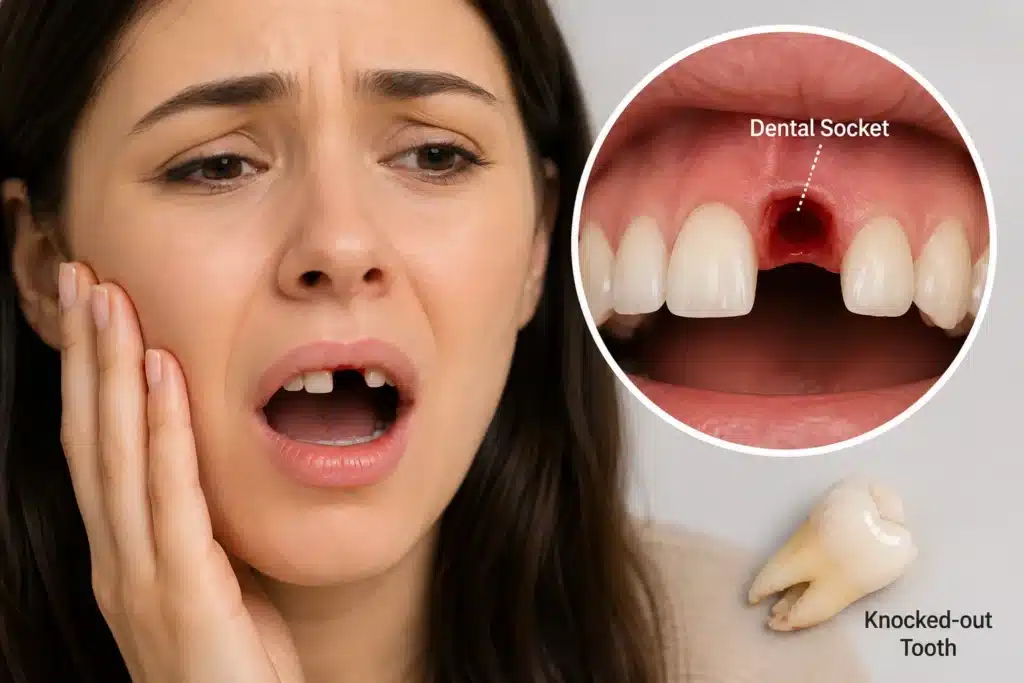
Time is critical—ideally within 30–60 minutes. Contact a dental office that offers emergency services right away.
What NOT to Do
Once the tooth is protected, contact an emergency dentist immediately. A knocked-out tooth requires urgent professional care as quickly as possible.
- ❌ Do not wrap the tooth in tissue or cloth
- ❌ Do not let the tooth dry out
- ❌ Do not scrub the root
- ❌ Do not delay seeking care
Quick, correct action gives your dentist the best chance to save the tooth.
What If a Baby Tooth Gets Knocked Out?
A knocked-out baby tooth should be handled differently than a permanent tooth. Parents should not attempt to place a baby tooth back into the socket because doing so may damage the developing adult tooth underneath.
Instead:
- Control any bleeding
- Keep the child calm
- Contact a pediatric dentist promptly
- Bring the tooth to the appointment if possible
The dentist will evaluate the injury and determine whether additional treatment is needed.
Foods to Eat After a Dental Trauma
Soft foods are usually recommended after a tooth injury because chewing pressure can irritate the healing area.
Helpful foods may include:
- Yogurt
- Applesauce
- Mashed potatoes
- Oatmeal
- Scrambled eggs
- Smoothies without straws
- Lukewarm soup
Crunchy or hard foods should be avoided until the dentist confirms proper healing.
Why Local Emergency Dental Care Matters
In urgent situations, proximity matters. Having access to an emergency dentist Chippewa Falls residents rely on means less travel time and faster treatment—especially important during Wisconsin winters or after-hours emergencies.
Willow Street Dental understands the needs of the local community, from families with active kids to adults enjoying outdoor recreation around Chippewa Falls.
Tips to Prevent Knocked-Out Teeth
While accidents are not always avoidable, certain precautions can reduce the risk of severe dental injuries.
Wear a Mouthguard During Sports: Protective mouthguards help absorb impact and reduce dental trauma during contact sports or recreational activities.
Use Seat Belts: Vehicle accidents are a common cause of dental injuries. Proper seat belt use lowers injury risk significantly.
Childproof the Home: Preventing falls around stairs, furniture, and slippery areas helps protect young children from dental trauma.
Avoid Using Teeth as Tools: Opening packages or biting hard objects increases the risk of cracks and injuries.
Act Fast to Protect Your Smile
A knocked-out tooth is a true dental emergency—but with the right steps and prompt professional care, your smile may still be saved. Knowing what to do ahead of time can reduce panic and improve outcomes when accidents happen.
If you or a loved one experiences dental trauma, contact Willow Street Dental right away to receive timely, compassionate emergency care. Acting quickly today could make all the difference for your smile tomorrow.
Frequently Asked Questions
How long can a knocked-out tooth survive outside the mouth?
Ideally, no more than 60 minutes. Keeping it moist significantly improves the chances of saving it.
Can baby teeth be reinserted?
No. Baby teeth are not typically reinserted due to the risk of damaging the developing adult tooth.
Is pain always present when a tooth is knocked out?
Not always. Some people feel shock or numbness at first, but treatment is still urgent.
What if I can’t find the tooth?
Seek care immediately. Your dentist can assess the area and recommend next steps to prevent complications.
Should I go to the ER or a dentist?
For dental trauma, a qualified Emergency Dentist Chippewa Falls patients trust is usually the best option, as they specialize in saving teeth and managing oral injuries.